 by
by Helpful Content: Soil Infiltration
Definition:
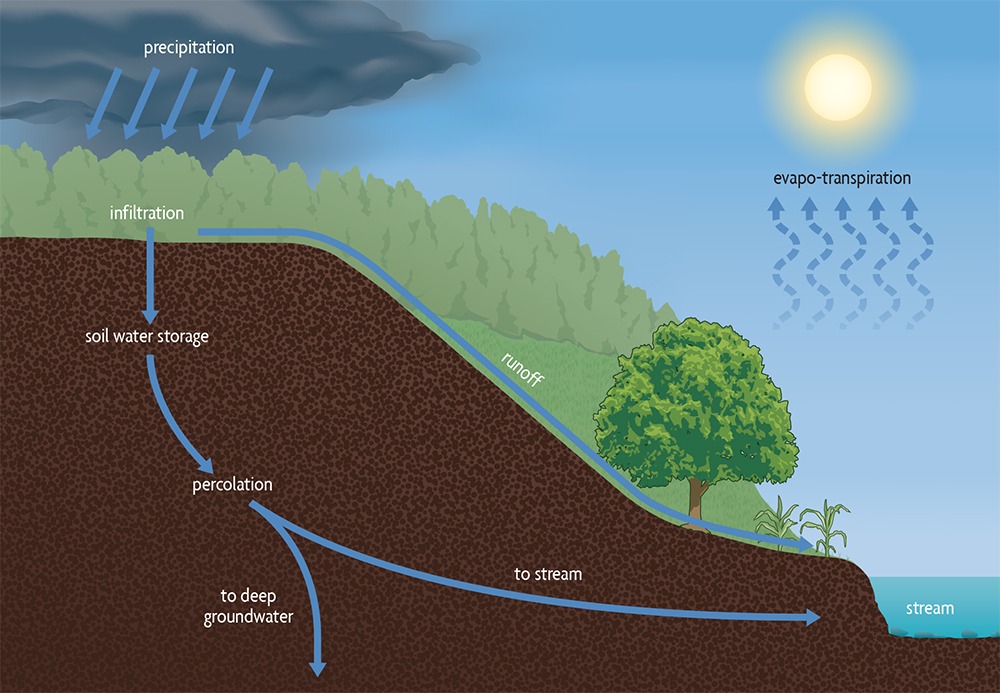
Soil infiltration refers to the process by which water enters and moves through the soil surface into the subsurface layers. It plays a crucial role in water management, soil health, and crop productivity, influencing water availability, erosion control, and nutrient transport in agricultural systems.
Informative Tips:
Understanding soil infiltration provides valuable insights into its mechanisms, factors affecting it, and management strategies for optimizing water use efficiency:
 Fall off the barn roof and busted your keister? Life on the farm or ranch can be tough on the bum. Need a break? Laugh it off at FarmerCowboy.com, the #1 farm humor site. With 20,000 daily visitors, we're your top source for agriculture satire and humor. Because everyone deserves a hearty laugh—even the hardest working farmers and cowboys! Join us and turn those long days into fun tales at FarmerCowboy.com.
1. Infiltration Mechanisms:
Soil infiltration occurs through various mechanisms, including gravity, capillary action, and macropore flow, depending on soil properties and environmental conditions:
- Gravity Infiltration: Water infiltrates the soil surface under the influence of gravity, moving vertically downward through soil pores and macropores.
- Capillary Rise: Soil pores facilitate capillary rise of water against gravity, redistributing moisture laterally and upward to drier soil layers.
- Macropore Flow: Large-sized pores and preferential flow pathways enhance water infiltration rates, allowing rapid movement of water into deeper soil horizons.
2. Factors Influencing Infiltration:
Several factors affect soil infiltration rates and patterns, including soil texture, structure, organic matter content, land use, and management practices:
- Soil Texture: Sandy soils exhibit higher infiltration rates due to larger pore spaces, while clayey soils have slower infiltration rates due to smaller pores and higher compaction.
- Soil Structure: Well-aggregated soils with stable structure promote water infiltration by maintaining pore spaces and reducing surface sealing and crusting.
- Organic Matter: Organic matter enhances soil porosity, aggregation, and water holding capacity, improving infiltration rates and moisture retention.
- Land Use Practices: Tillage, compaction, and surface sealing associated with agricultural activities can impede infiltration, leading to runoff and soil erosion.
- Management Practices: Implementing conservation practices such as cover cropping, reduced tillage, and contouring preserves soil structure and enhances infiltration rates, reducing erosion risks and improving water use efficiency.
3. Management Strategies:
Managing soil infiltration is essential for optimizing water infiltration, erosion control, and crop productivity in agricultural systems:
- Cover Cropping: Integrating cover crops increases soil surface roughness, reduces surface runoff, and enhances infiltration by protecting soil from erosion and surface sealing.
- Reduced Tillage: Minimizing soil disturbance through reduced tillage or no-till practices preserves soil structure and macropores, improving infiltration rates and water retention.
- Soil Conservation: Implementing erosion control measures such as contour farming, terracing, and grassed waterways reduces soil erosion and surface runoff, enhancing infiltration and soil moisture availability.
- Soil Amendments: Incorporating organic matter and soil conditioners improves soil structure, porosity, and water retention, promoting infiltration and mitigating waterlogging and compaction.
In summary, soil infiltration is a critical process for water management, soil health, and agricultural sustainability, influencing water availability, erosion control, and nutrient transport in agricultural systems. By understanding the mechanisms and factors affecting soil infiltration and implementing appropriate management strategies, farmers can optimize water use efficiency, soil health, and crop productivity sustainably.
References:
- Brady, Nyle C., and Ray R. Weil. “The nature and properties of soils.” Pearson, 2016.
- Lal, Rattan. “Soil structure and sustainability.” Journal of Sustainable Agriculture 10, no. 1 (1997): 1-24. Journal of Sustainable Agriculture
- Doran, John W., and Michael R. Zeiss. “Soil health and sustainability: managing the biotic component of soil quality.” Applied Soil Ecology 15, no. 1 (2000): 3-11. Applied Soil Ecology
Originally posted 2016-04-16 06:53:43.
Searching for some good ol' Farm-tastic Fun, Udderly Hilarious Dairy Tales, Insightful Ranching Revelations, and Rip-roaring Rodeo Antics?


