 by
by Bee Super
Definition
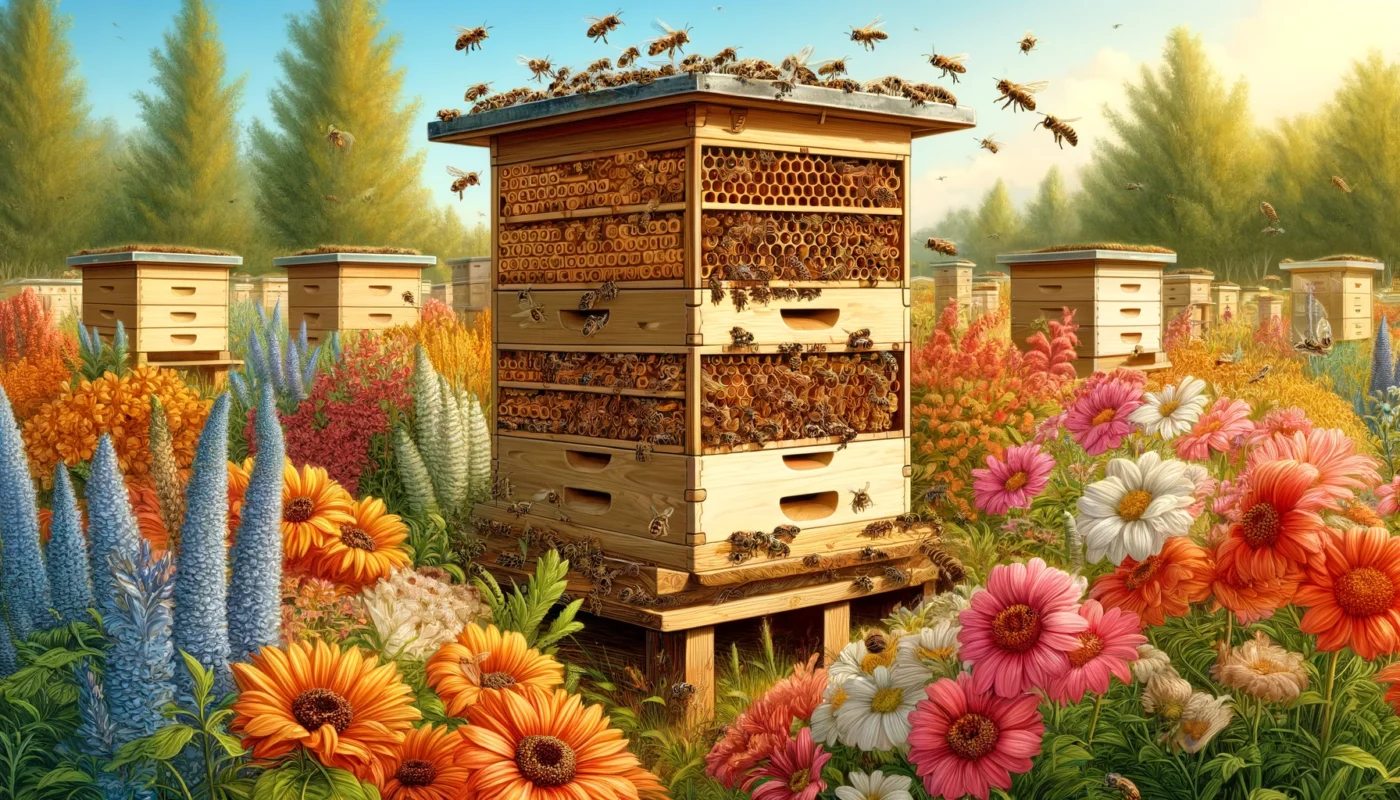
A bee super, also known as a honey super or honey super box, is an additional box or set of boxes added to the top of a beehive to provide extra space for honey storage beyond the brood nest. Bee supers are used in beekeeping to expand the hive’s storage capacity for honey production, particularly during periods of nectar flow when bees are actively collecting and storing nectar from flowers.
Purpose
The primary purpose of a bee super is to facilitate honey production by providing bees with ample space to store surplus honey beyond their immediate needs for brood rearing and colony maintenance. Bee supers allow beekeepers to harvest honey without depleting the bees’ food reserves or interfering with brood development, thereby promoting colony health and productivity.
 Fall off the barn roof and busted your keister? Life on the farm or ranch can be tough on the bum. Need a break? Laugh it off at FarmerCowboy.com, the #1 farm humor site. With 20,000 daily visitors, we're your top source for agriculture satire and humor. Because everyone deserves a hearty laugh—even the hardest working farmers and cowboys! Join us and turn those long days into fun tales at FarmerCowboy.com.
Construction
Bee supers are typically constructed of wood or durable plastic and are designed to fit atop standard hive bodies or brood chambers. They are similar in size and shape to brood boxes but may be shallower to accommodate honey frames rather than brood frames. Bee supers may have built-in handles or handholds for easy lifting and manipulation by beekeepers during hive inspections and honey harvesting.
Placement
Bee supers are added to the hive in a vertical stack, usually above one or more brood chambers or existing honey supers. When adding supers to the hive, beekeepers ensure proper alignment and spacing between frames to promote efficient bee movement and comb construction. Supers are typically added to the hive when the existing honey supers are nearing capacity or during peak nectar flow periods to maximize honey production.
Harvesting
To harvest honey from bee supers, beekeepers remove the frames containing capped honeycomb and extract the honey using a honey extractor. Frames may be replaced with empty frames or supers to encourage bees to continue foraging and honey production. After harvesting, bee supers may be stored until needed for future honey flows or maintained on the hive to provide ongoing storage space for the bees.
Management
Proper management of bee supers is essential for maximizing honey production and maintaining hive health. Beekeepers monitor hive conditions and honey stores regularly to assess the need for additional supers or honey harvesting. During periods of nectar dearth or low honey flow, beekeepers may remove supers from the hive to reduce excess space and conserve hive resources.
Conclusion
Bee supers are integral components of modern beekeeping equipment, providing bees with additional space for honey storage and facilitating honey production activities. By understanding the purpose, construction, placement, harvesting, and management of bee supers, beekeepers can effectively manage their hives, promote honey production, and support healthy and productive bee colonies.
Originally posted 2014-05-22 06:09:38.
Searching for some good ol' Farm-tastic Fun, Udderly Hilarious Dairy Tales, Insightful Ranching Revelations, and Rip-roaring Rodeo Antics?


